Chapter 1: Dirty Deeds Done Dirt Cheap

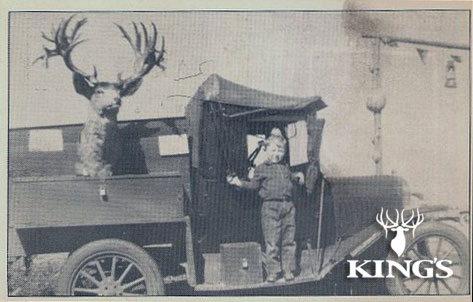
The Broder Buck story will live on forever.
This true factual based story takes you back to a time when cowboys wearing red sashes were the law of the land — and will expose how the cowboys who now run Canada’s justice system are still just that but wear white sashes instead of RED.
The Broder Buck has become, The Buck for Justice. It will live on forever as a true legend — one that most agree as being ” one of the greatest big game animal ever taken by a sport hunter,” and that have said will go down in history as it has become as legendary as Tombstone and as infamous as Wyatt Earp and Doc Holliday.

“THE BUCK FOR JUSTICE”
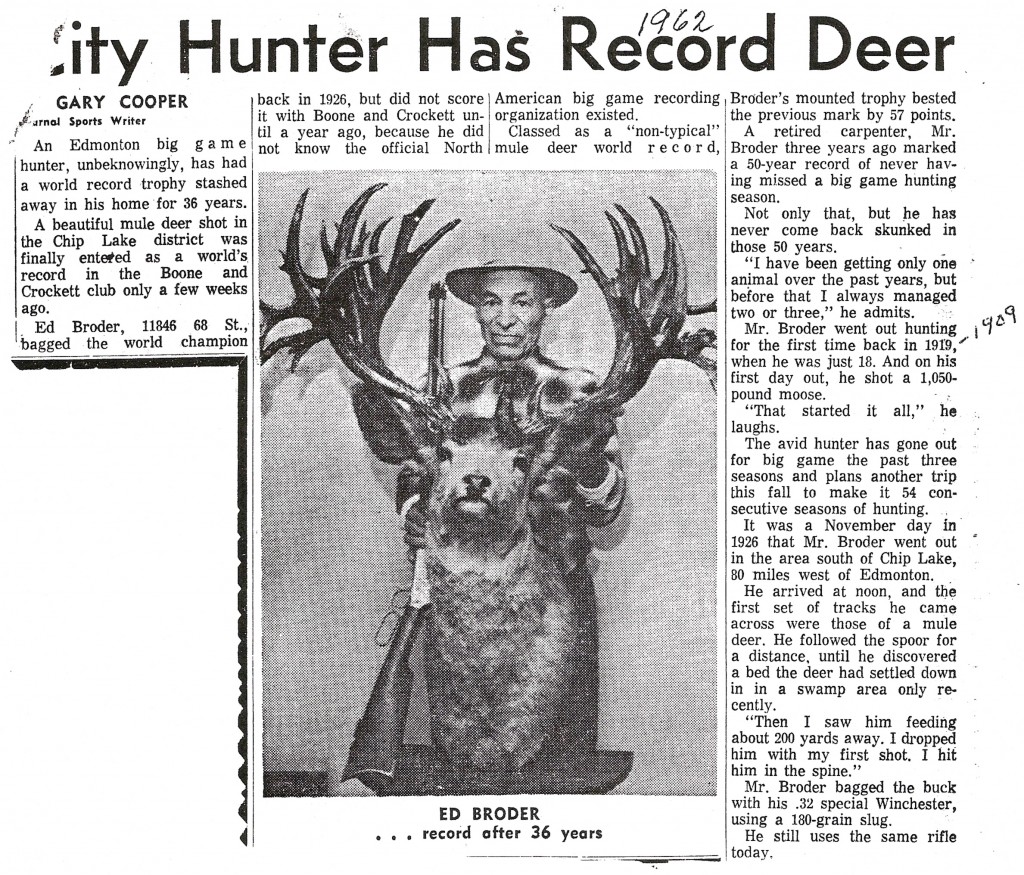
The Broder Buck was officially scored by the Boone & Crockett Club in 1962 and pronounced The World Record Non-Typical Mule Deer, with an unprecedented Boone & Crockett score of 355 2/8 inches of antler. As the story will be told by many:
- Hunter: Ed (Edmund) Broder
- Location: Near Chip Lake, Alberta, Canada
- Date taken: November 1926
- Final Boone & Crockett score: 355 2/8 inches — the highest non-typical mule deer ever recorded
The rack surpassed the previous world record by more than half as many points and holds the title of World Record Non-Typical Mule Deer. It represents the largest non-typical mule deer in the Boone & Crockett North American record books — and still holds that status today.
The story is a dramatic one. Ed Broder did not leave a will. After his death in 1968, a dispute among his heirs led to a decades-long legal battle that began in 1997 and continues to this day — evolving from a family inheritance dispute into a confrontation with the Crown, justices of the court, lawyers, and the RCMP. This website aims to expose Canada’s Department of Justice as a swamp of white-collar criminals who willfully conspired to frame, falsely jail, and defraud the defendants Donald Broder and Craig Broder — all to line the pockets of their lawyer friends by stealing from the estate of Edmund Broder.
This website will prove to you the reader that The Crown in right of Alberta, Canada along with Justices of the Court, lawyers, Royal Canadian Mounted Police (RCMP), The Alberta Justice Department, The Minister of Justice, Allison Redford, The Edmonton Commercial Crime Unit, and The Supreme Court of Canada all were involved in this conspiracy to defraud, frame and extort the Broder Buck to line the pockets of their friends.
But don’t take our word for it. The court documents will speak for themselves.
When Ed Broder passed away on December 26, 1968, his siblings took it upon themselves to help themselves to his personal belongings — despite no formal probate process ever being filed. George, Earl, and Richard Broder took the more valuable items, including Ed’s Model T, firearms, tools, saddles, and collectibles. Richard Broder took ownership of the family home. The daughters — Margaret, Doris, and Luella Broder — took on Hazel Broder’s possessions after she passed away in 1967, the year before Edmund.
In 1971–72, Donald Broder went to the family home and claimed the Broder Buck as his share of Edmund’s personal effects, maintaining exclusive possession of it for over 25 years. Then, in 1997, after Donald and his son Craig Broder voluntarily displayed the Broder Buck at the Edmonton Sportsman Show, Craig was served with a demand letter from Grace Parotta-King — a lawyer from Emery Jamieson LLP — on behalf of George Broder, demanding the Broder Buck be returned after the Edmonton Sportsman Show ended.
Lawyers at the time made it clear: none of the siblings had any legal right to demand its return without first going through probate and being formally appointed by the court. No such application had ever been made in over 25 years. The limitation period had long expired — unless the siblings could prove Donald had agreed to hold the Buck on behalf of all of them and could account for what they themselves had already taken.
Donald Broder retained lawyer Joseph Kueber of Bryan & Company, who filed a Statement of Defence at Edmonton Law Courts within Action No: 9703-12949 on July 28, 1997, pleading that the plaintiffs in their personal capacity had no legal or equitable right to claim the Broder Buck, and that only a personal representative would have such a right to make demands and act on behalf of a deceased person. Back in 1969–1970, Donald’s siblings had already taken what they wanted from their father Edmund Broder’s belongings without any formal process — meaning no personal representative existed.
Now, if they wanted to make claims, they first had to apply for probate, appoint a personal representative, and follow Surrogate Court rules to formally demand the return of all personal effects — not just the Broder Buck. Donald Broder rightly pointed out that 27 years had passed and the limitation period had very likely expired, but he was still willing to cooperate if probate was properly granted and a full accounting of everything taken could be made.
The plaintiffs’ lawyer Grace Parotta-King of Emery Jamieson filed a notice to cease acting on April 17, 1998, and Elizabeth MacInnis of Weir Bowen replaced her by filing a change of solicitor on June 1, 1998.
The defendants’ lawyer Joseph J. Kueber of Bryan & Company was discharged and replaced by Robert J. Sawers of R. J. Sawers & Associates on September 30, 1999.
The two-year limitation period for the addition of a new party to the Statement of Claim filed and served on July 8, 1997, ended on July 9, 1999 — or, at the very least, two years after the Statement of Defence was filed on July 28, 1997, which would be July 29, 1999.
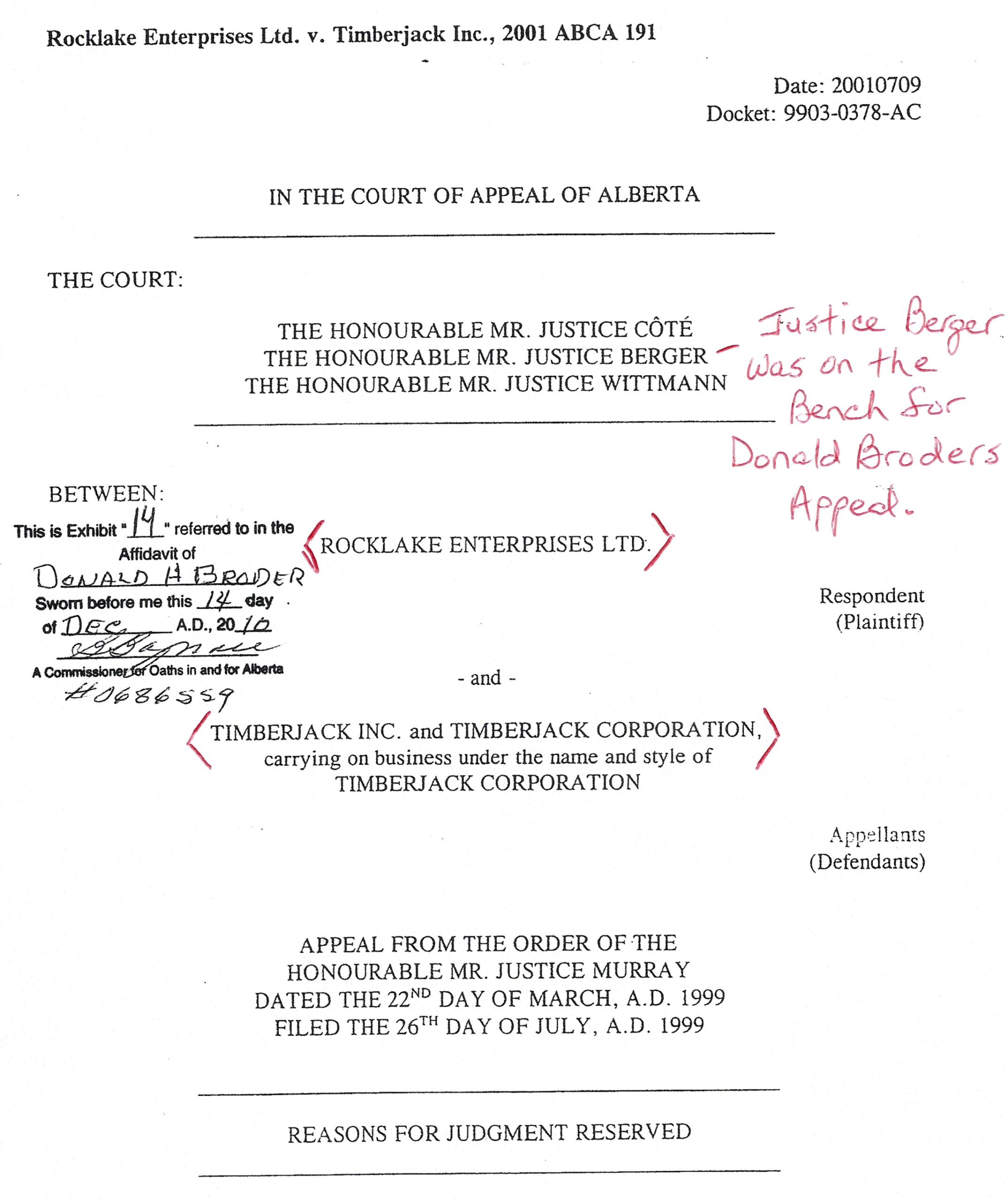
Case Law — Rocklake Enterprises Ltd. v. Timberjack Inc., 2001 ABCA 191:
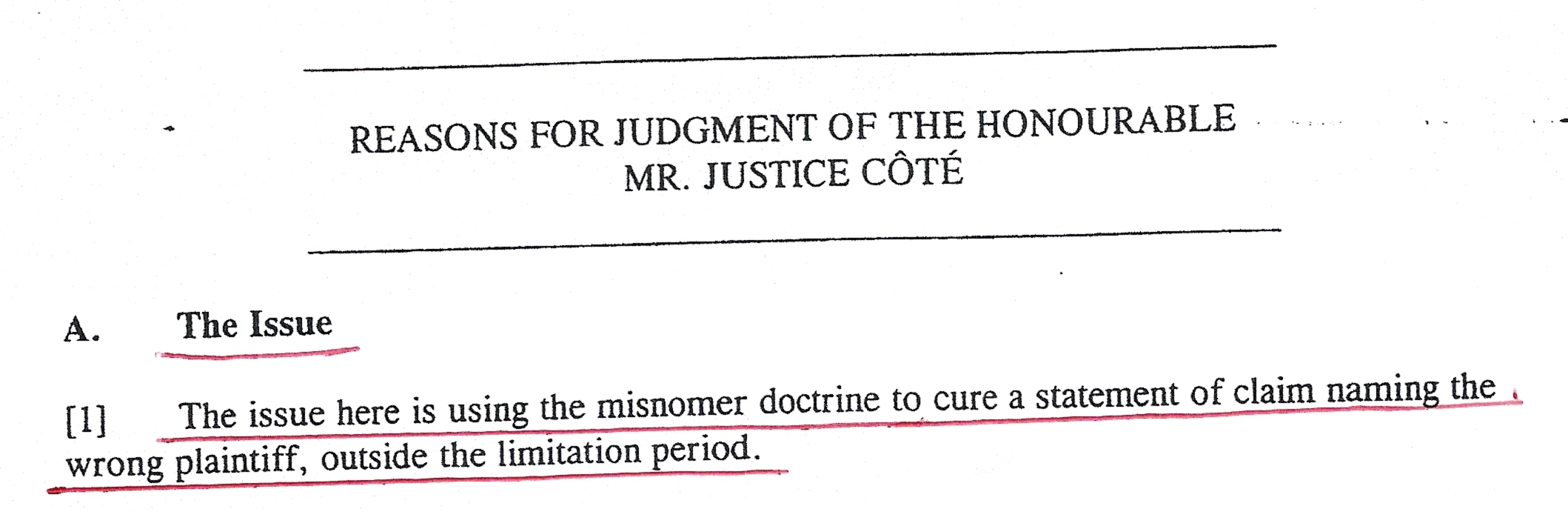

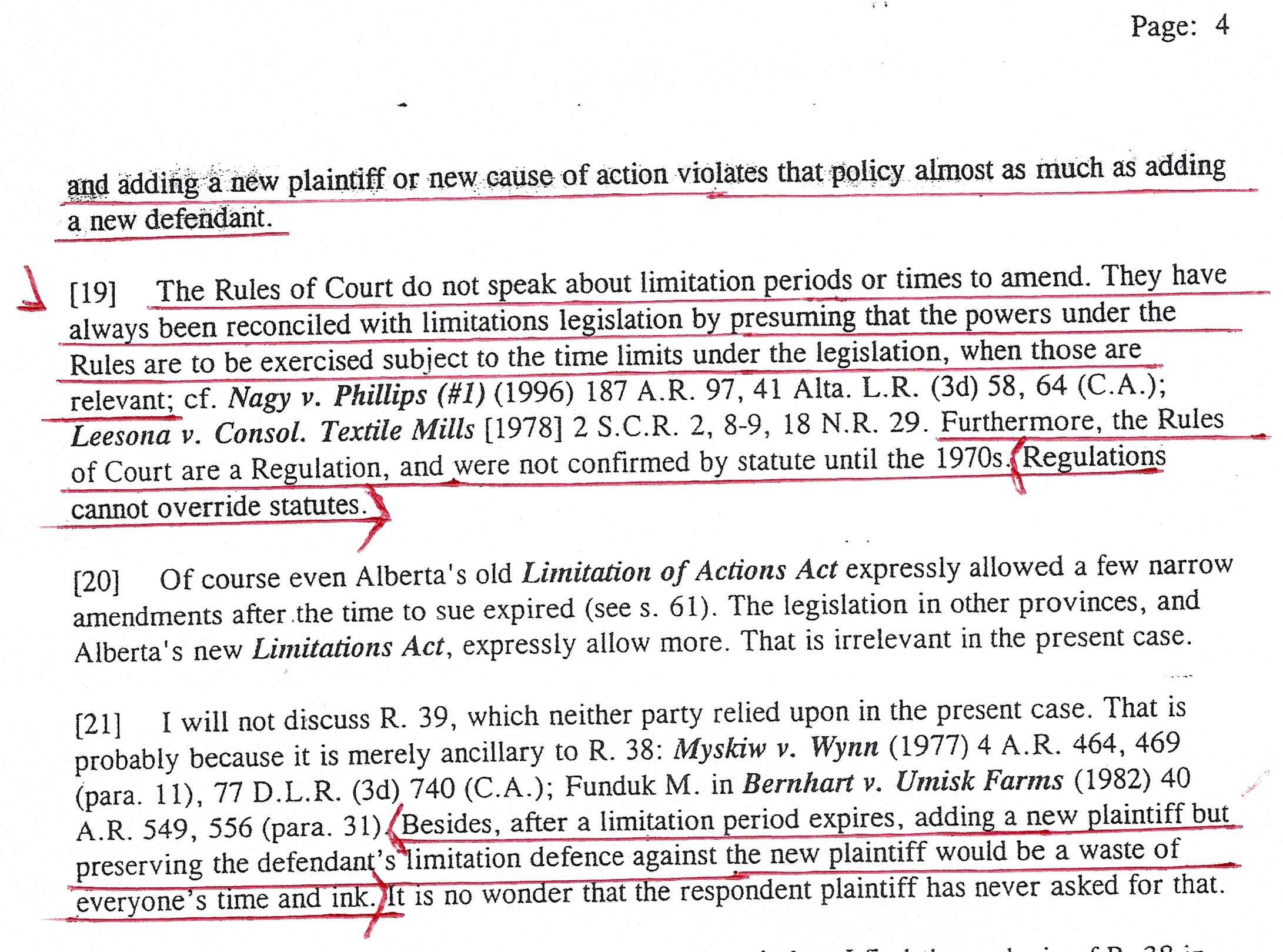
It is now October 2000 — over three years after the original Statement of Claim was filed on July 8, 1997.
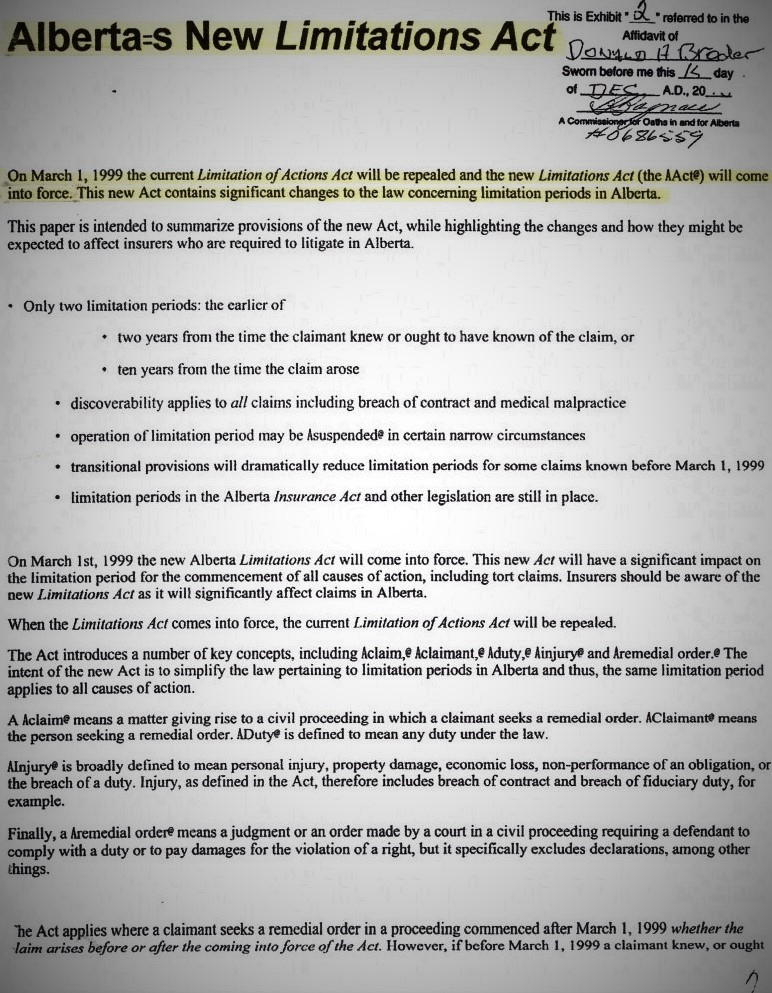
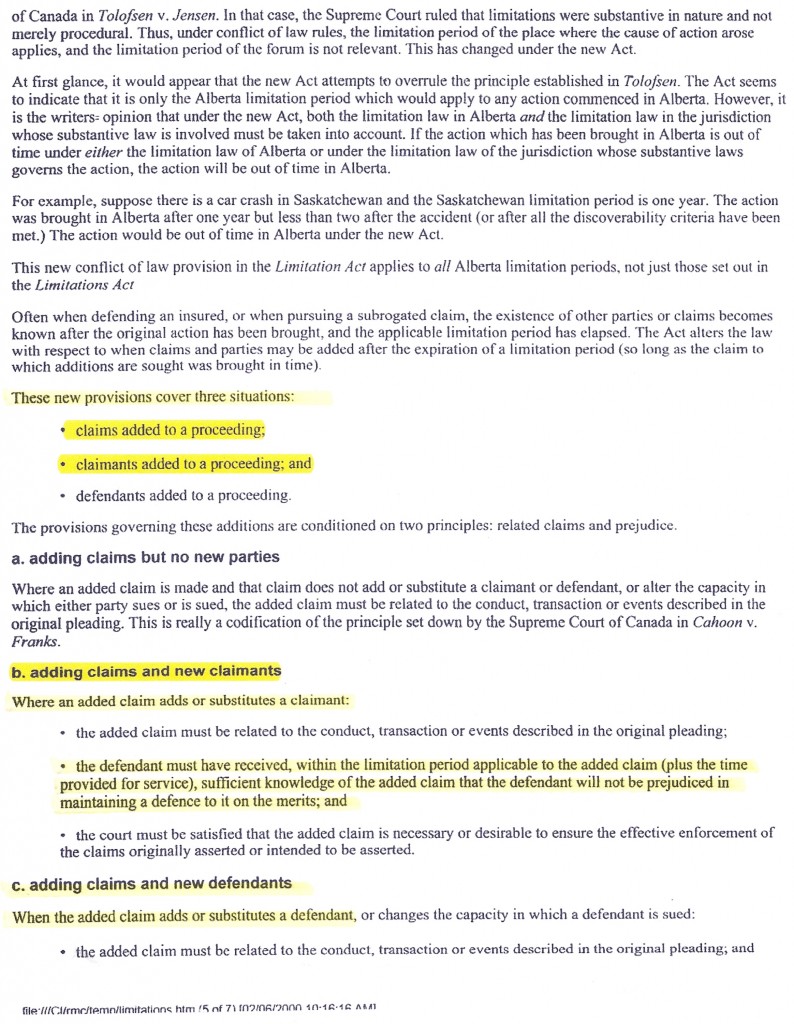
The plaintiffs’ lawyer Elizabeth MacInnis of Weir Bowen requested consent from Donald and Craig Broder’s lawyer, Robert Sawers of R. J. Sawers & Associates, to file the Certificate of Readiness and close pleadings within Alberta Court of Queen’s Bench Action No: 9703-12949. Donald Broder refused consent, because an application for probate had never been filed at the Surrogate Court. Without probate and a properly appointed personal representative, the plaintiffs had no legal standing to sue on behalf of Edmund Broder’s estate. If Elizabeth MacInnis closed the pleadings within this action before filing an application for probate, Donald Broder and Craig Broder could reschedule their outstanding Rule 129 Application asserting that the action was frivolous, vexatious, and an abuse of process — as supported by case law: Mugford v. Mugford.
CASE LAW
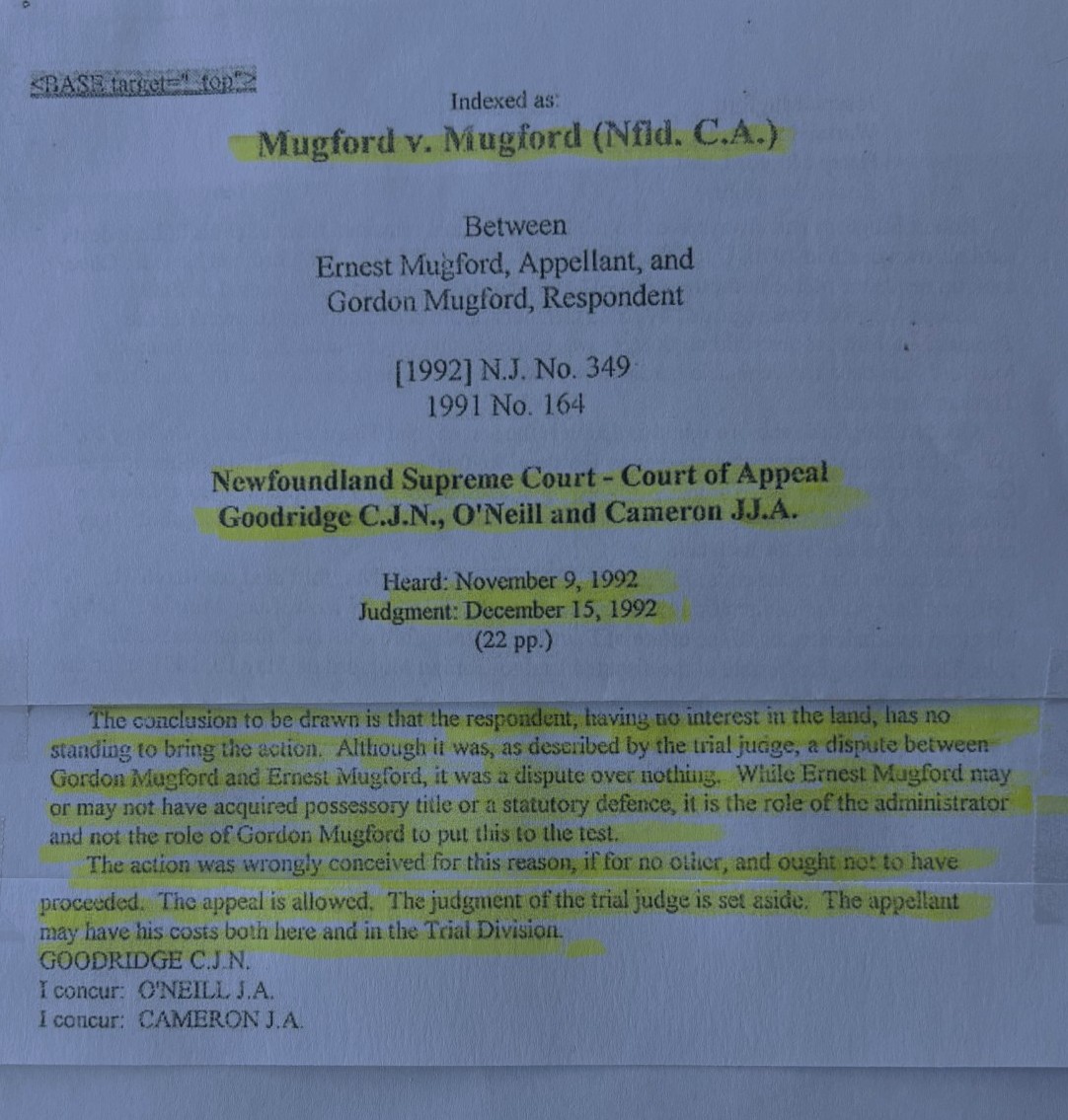
Mugford v. Mugford (Nfld. C.A.)
“The conclusion to be drawn is that the respondent, having no interest in the land, has no standing to bring the action. Although it was, as described by the trial judge, a dispute between Gordon Mugford and Ernest Mugford, it was a dispute over nothing. While Ernest Mugford may or may not have acquired possessory title or a statutory defence, it is the role of the administrator and not the role of Gordon Mugford to put this to the test.”
“The action was wrongly conceived for this reason, if for no other, and ought not to have proceeded. The Appeal is allowed. The judgment of the trial judge is set aside. The appellant may have his costs both here and in the Trial Division.”
Even if a personal representative had been appointed, the two-year limitation period to add or substitute a party had already expired in July 1999. Still, MacInnis sought and obtained a court order allowing her to file the Certificate of Readiness by March 15, 2001, and Donald Broder was ordered to pay $1,000 in costs for not consenting. But she never filed the Certificate of Readiness as ordered. Instead, on May 24, 2001 — well past the deadline — she suddenly applied for probate and falsely claimed Donald had been served. She then succeeded in appointing two of her own clients as personal representatives, creating a clear conflict of interest.


Elizabeth MacInnis of Weir Bowen should never have been permitted to represent the estate while simultaneously acting against a beneficiary of that same estate — Donald Broder — in the very legal action she had just forced to a close by obtaining the Certificate of Readiness court order from Justice Lewis, requiring it to be filed by February 15, 2001. Siblings cannot sue each other over estate property until probate is granted and a court-appointed personal representative is in place to act on behalf of the deceased.
Donald Broder and Craig Broder had already won the lawsuit — both legally and procedurally — for two reasons:
- Elizabeth MacInnis forced the pleadings closed on herself by court order before ever applying for probate or appointing personal representatives through the Surrogate Court. This locked the plaintiffs out of the ability to sue properly, because no one had the legal authority to act on behalf of Edmund Broder’s estate at the time the pleadings were closed.
- The two-year limitation period had already expired. The original Statement of Claim was filed on July 8, 1997. By July 9, 1999, the time limit to add or substitute parties — such as legally appointed personal representatives — had passed. By December 18, 2000, when they attempted to move things forward, it was far too late.
Knowing this, Donald and Craig Broder had their lawyer Robert Sawers file for a jury trial — but only to secure the procedural win. They did not even need a jury, because the plaintiffs had no standing left. Just before the jury application, Sawers filed a Rule 129 Application, arguing the entire lawsuit was frivolous, vexatious, and an abuse of court process — because the plaintiffs, in their personal capacities, had no legal right to sue. Only properly appointed personal representatives could do that.


Supporting this was a precedent-setting case: Mugford v. Mugford, from the Newfoundland Court of Appeal. The case made it clear: only an estate administrator or personal representative has standing to bring legal action on behalf of someone who has passed away. In the Mugford case, the court ruled the claim invalid because the person suing had no legal right to do so — just as in the Broder case.
Quote from the Mugford v. Mugford ruling:
“It is the role of the administrator and not the role of [a sibling] to put this to the test… The action was wrongly conceived… and ought not to have proceeded.”
In short: Donald and Craig Broder had already won, because the lawsuit against them was fatally flawed from the start.
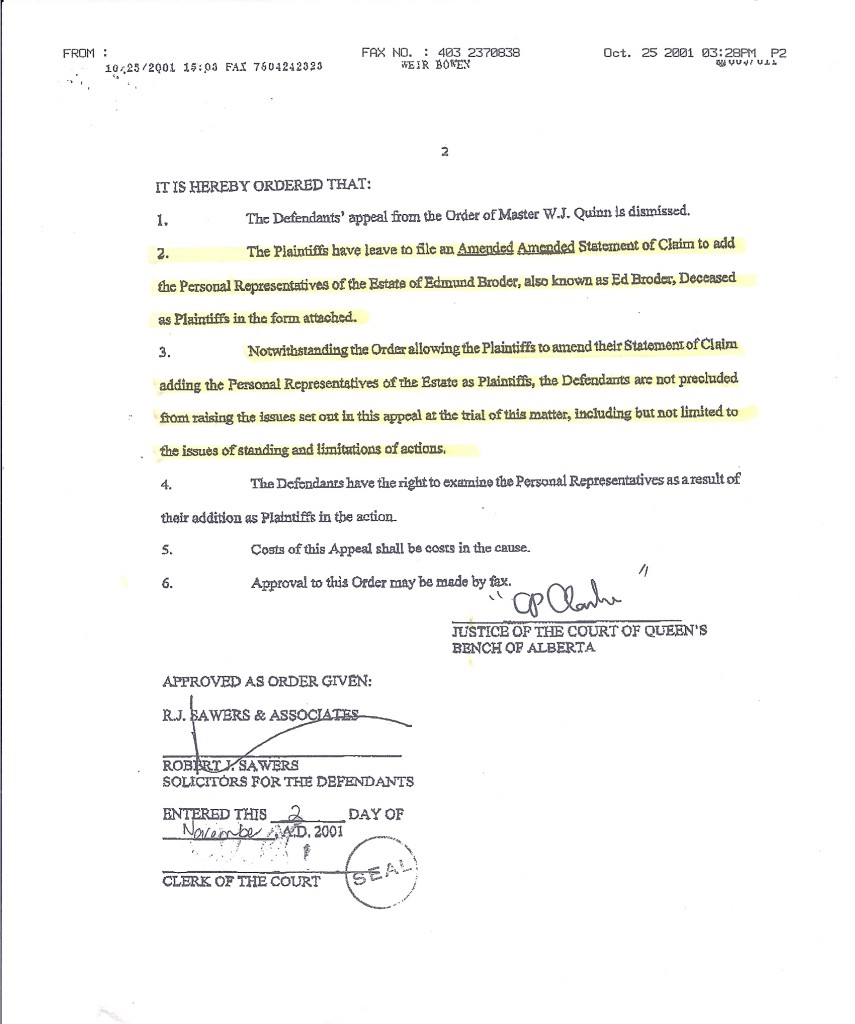
Robert Sawers initiated the Rule 129 Application and Master Quinn adjourned the application to allow time for Elizabeth MacInnis to apply for probate. Donald Broder and Craig Broder appealed Master Quinn’s decision and the appeal was heard by Justice C. P. Clarke. By the appeal date of November 2, 2001, Elizabeth MacInnis had applied for probate using a false affidavit of service of the Application on Donald Broder. At the appeal, Justice C. P. Clarke ordered that MacInnis could substitute the personal representatives as plaintiff — and we were watching, and it came with a wink.
Justice C. P. Clarke substituted new plaintiffs — “the personal representatives” — into Alberta Court of Queen’s Bench Action No: 9703-12949 on Tuesday, the 18th day of September, A.D. 2001 — four years and two months after the Statement of Claim file date of July 8, 1997. It was Donald Broder and Craig Broder’s appeal, and Justice Clarke knew the pleadings were closed and that Elizabeth MacInnis needed his assistance to create standing, because she could not file any pleading due to her own actions of closing the pleadings on herself — immediately following Donald Broder and Craig Broder’s Rule 129 Application. The Wachowich Order had further stated that only the defendants could extend the time to file the Certificate of Readiness that closes the pleadings within this action (No: 9703-12949).
With his order, Justice C.P. Clarke opened the door for his lawyer associates to carry out what followed: a campaign of conspiracy, collusion, fraud, forgery, perjury, garnishment, and the extortion of personal property — including a forced entry into the private home of Donald and Joyce Broder, two vulnerable and elderly Canadians who had done nothing wrong.
Whether Justice John Moir — the father of Elizabeth MacInnis (Moir) played a direct role remains unproven. What is far harder to dismiss is the question of whether favors were exchanged behind closed doors among him and his associates, including Justice C.P. Clarke, as the court order below suggests.

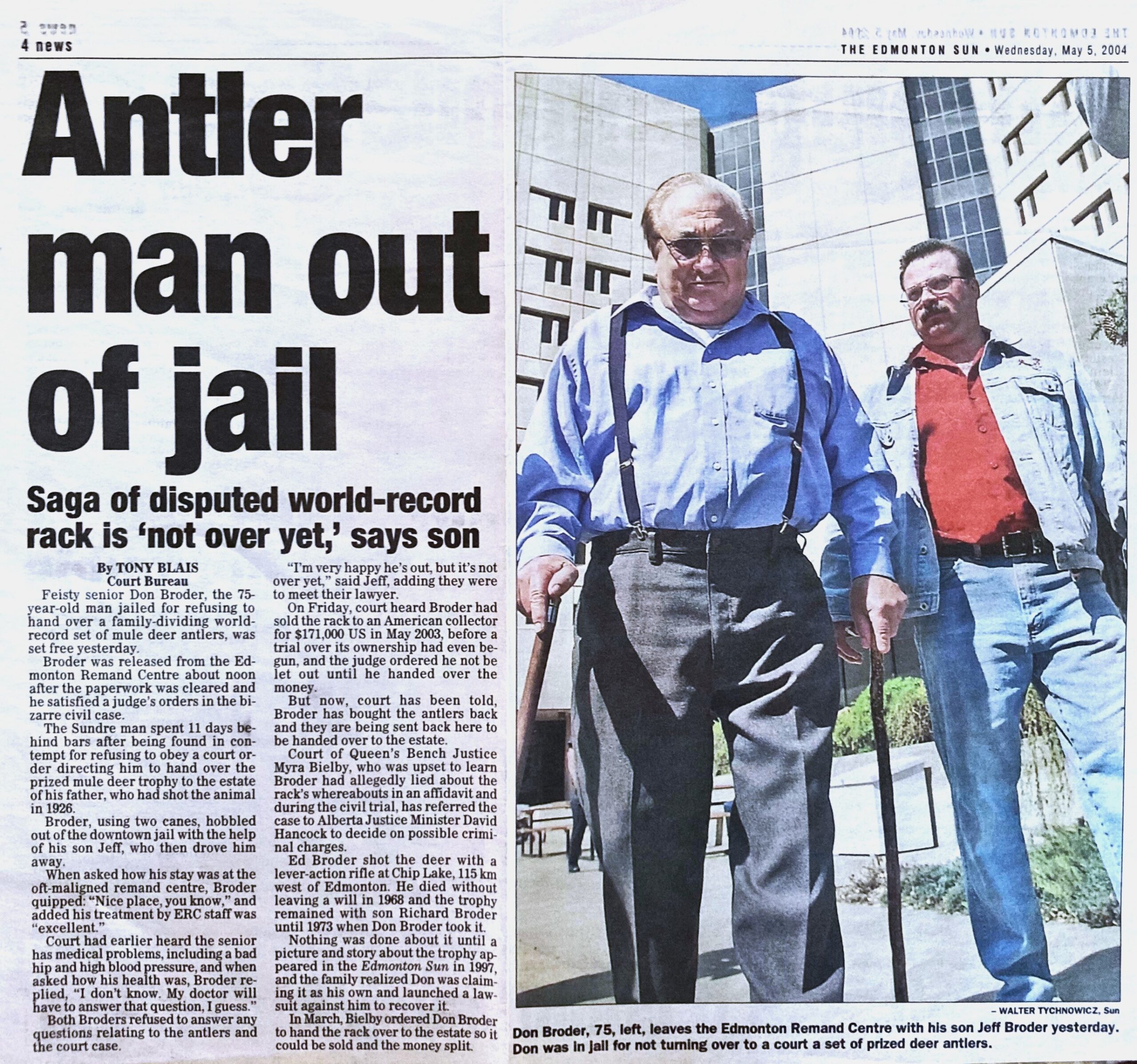
After the fraudulent trial concluded from January 19 to 23, 2004, Elizabeth MacInnis of Weir Bowen had Justice Myra B. Bielby falsely incarcerate Donald Broder at the Edmonton Remand Centre from April 26 to May 5, 2004, when he refused to comply with her court order to turn over the Broder Buck to the personal representatives.